The Short Answer: They Can Be, Depending on Your Perspective
Grape hyacinths (Muscari spp.) occupy a gray area when it comes to invasiveness. They’re not classified as noxious invasive weeds like Japanese knotweed or purple loosestrife, but they do spread aggressively through both bulbs and seeds. For some gardeners, this self-propagating habit is a blessing that fills borders with carefree spring color. For others, it’s a frustrating battle against a plant that refuses to stay where it was planted.
Understanding how grape hyacinths spread, where they’re problematic, and how to control them helps you make informed decisions about including these charming spring bulbs in your landscape.
What Are Grape Hyacinths?
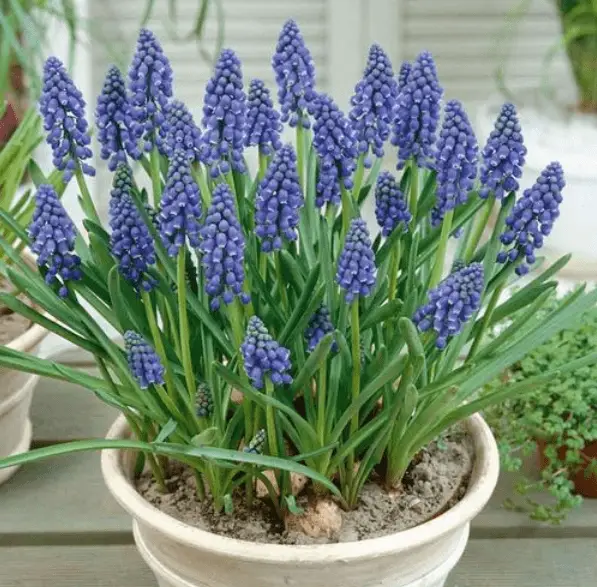
Grape hyacinths (Muscari species) are small, bulbous perennials native to Europe and Asia. They produce dense spikes of small, urn-shaped flowers that resemble miniature grapes—hence their common name. Most varieties bloom in early to mid-spring, creating rivers of purple-blue that naturalize readily in lawns, borders, and woodland gardens.
Common Species
- Muscari armeniacum: The most commonly grown species, with deep blue-purple flowers. Highly vigorous and the most likely to spread aggressively.
- Muscari botryoides: Smaller, less aggressive species with pale blue flowers. Native to Europe, sometimes called “common grape hyacinth.”
- Muscari neglectum: Another vigorous spreader with dark blue to blackish flowers. Also called “starch grape hyacinth.”
- Muscari latifolium: Distinctive two-tone flowers (blue and purple) with broader leaves. Less invasive tendency.
How Grape Hyacinths Spread
1. Bulb Division (Vegetative Spread)
The primary way grape hyacinths naturalize is through bulb offsets. Each parent bulb produces numerous small bulbils around its base. These develop into new plants, gradually expanding the original planting into a dense carpet.
- Bulbs multiply rapidly—single bulb can produce 10+ offsets per year
- New bulbs form within inches of the parent
- Spread continues indefinitely in suitable conditions
2. Seed Dispersal (Generative Spread)
After flowering, grape hyacinths produce seed pods that mature and split open, releasing seeds that can spread beyond the original planting:
- Seeds fall near parent plants initially
- Wind, water, and animals disperse seeds further
- Seedlings take 2-3 years to reach flowering size
- Seeds remain viable for several years in soil
3. “Accidental” Spread
Humans inadvertently spread grape hyacinths through:
- Moving soil containing bulbils
- Dividing and sharing perennials with attached bulbils
- Compost that didn’t reach temperatures high enough to kill bulbs
Where Are Grape Hyacinths Considered Invasive?
North America
In the United States and Canada, grape hyacinths are not listed as noxious weeds at the federal level. However:
- They’ve naturalized widely across temperate regions
- They’re considered “potentially invasive” in some northeastern states
- They appear on “watch lists” in several states
- Local conditions determine their invasive potential
Europe and Native Range
In their native European range, grape hyacinths are well-behaved components of meadow and woodland ecosystems. They don’t typically become problematic because natural checks and balances exist.
Other Regions
In parts of Australia, New Zealand, and other temperate regions with suitable climates, grape hyacinths have escaped cultivation and naturalized in wild areas, sometimes displacing native vegetation.
Factors That Influence Spread Rate
Climate Conditions
- Cold winters: Required for proper bulb development; won’t spread in tropical climates
- Well-drained soil: They thrive and multiply faster in good conditions
- Moisture: Adequate rainfall or irrigation supports spread
- Sun exposure: Full sun to partial shade ideal for naturalization
Site Conditions
- Lawns: They spread readily in turf that isn’t heavily fertilized
- Borders: Can overtake slower-growing perennials
- Woodland: Naturalize beautifully under deciduous trees
- Disturbed areas: Colonize readily in new plantings
Signs Your Grape Hyacinths Are Becoming Problematic
- Appearing in lawns where not intentionally planted
- Overwhelming other spring bulbs or perennials
- Spreading into neighbor’s properties
- Seeding into wild areas or natural spaces
- Requiring significant effort to remove
Controlling Grape Hyacinth Spread
Prevention Strategies
Deadheading
- Remove flower heads after bloom before seed pods form
- Prevents seed dispersal entirely
- Doesn’t stop bulb multiplication
Barriers
- Plant in containers or raised beds with barriers
- Use landscape fabric or edging to contain spread
- Monitor for escapees beyond barriers
Careful Placement
- Avoid planting near wild or natural areas
- Keep away from property boundaries
- Choose sites where spread is acceptable
Removal Methods
Digging Out Bulbs
The most effective—but labor-intensive—method:
- Dig deeply (6-8 inches) with a garden fork
- Sift through soil to find all bulbils (very small ones easily missed)
- Recheck area in spring and remove any new growth
- Repeat for several years to ensure complete removal
Smothering
- Cover area with cardboard + heavy mulch for 1-2 years
- Prevents photosynthesis, weakening bulbs
- May not kill all bulbs—some persist
Herbicides
- Glyphosate can be effective when applied to actively growing foliage
- Must be applied carefully to avoid harming desirable plants
- May require multiple applications
- Consider environmental impacts before using
Mowing
- In lawns, regular mowing may reduce vigor over time
- Won’t eliminate established bulbs
- May keep foliage short but bulbs persist
Situations Where Grape Hyacinths Are Valuable
Despite their spreading tendency, grape hyacinths offer significant benefits in appropriate settings:
Naturalizing Projects
- Drifts under deciduous trees
- Meadow plantings with other spring bulbs
- Areas where low-maintenance spring color is desired
Difficult Sites
- Slopes where erosion control helps
- Dry, poor soils where little else thrives
- Areas where formal maintenance isn’t practical
Container Gardens
- Easy to control in pots and containers
- Can be divided regularly to prevent crowding
- Portable spring color for patios and decks
Alternatives for Gardeners Concerned About Invasiveness
Less Aggressive Grape Hyacinth Species
- Muscari latifolium: Two-toned flowers, slower to spread
- Muscari comosum (tassel hyacinth): Unusual tassel-like flower heads
- Muscari azureum: Compact, well-behaved species
Alternative Spring Bulbs
- Siberian squill (Scilla siberica): Similar blue color, spreads but less aggressive
- Glory-of-the-snow (Chionodoxa): Early bloomer, self-seeds moderately
- Crocus species: Many naturalize without becoming invasive
- Species tulips: Return reliably without aggressive spread
Responsible Gardening with Grape Hyacinths
If you decide to grow grape hyacinths:
- Research your local situation: Check if they’re problematic in your area
- Deadhead after flowering: Prevent seed spread
- Plant where spread is acceptable: Embrace their naturalizing habit
- Contain in borders: Use edging to limit spread
- Don’t share with others: Unless they understand the plant’s habit
- Never dump in wild areas: Dispose of excess bulbs responsibly
- Monitor adjacent properties: Remove escapees promptly
Quick Reference: Invasiveness Assessment
| Aspect | Assessment |
|---|---|
| Federal noxious weed status | Not listed |
| State invasive plant lists | Rarely listed; some “watch” status |
| Ecological threat level | Low to moderate |
| Difficulty of control | Moderate to difficult |
| Primary spread mechanism | Bulb division |
| Garden aggression level | High for M. armeniacum |
Conclusion
Are grape hyacinths invasive? The answer is nuanced. They’re not ecologically devastating like kudzu or Japanese honeysuckle, but they do spread aggressively through bulb multiplication and seed dispersal. Whether this habit is a blessing or a curse depends entirely on your gardening goals and site conditions.
In contained gardens where their spreading habit is desired, grape hyacinths provide reliable, low-maintenance spring color that improves with age. In formal borders, natural areas, or properties where containment is important, their tendency to wander can become problematic.
The key is making an informed decision before planting. Understand their growth habit, choose appropriate sites, and implement control measures if needed. With proper management, grape hyacinths can be valuable additions to the spring garden without becoming unwelcome invaders.
This article is for educational purposes. Check with your local extension service or native plant society for region-specific information about grape hyacinth behavior in your area.