The Quick Answer
No, you should not cut your butterfly bush back hard in the fall. While a light cleanup is fine, the best time for major pruning is late winter to early spring, just as new growth begins to emerge. Pruning heavily in autumn leaves the plant vulnerable to winter damage and can reduce its cold hardiness.
This advice surprises many gardeners who’ve been taught to “clean up” their gardens in fall. But understanding why butterfly bushes need different treatment will help you grow a healthier, more floriferous plant that returns reliably year after year.
Why Fall Pruning Is a Bad Idea
Winter Protection
In cold climates, the old stems and foliage left on your butterfly bush through winter provide some protection for the crown and roots. When you cut everything back in fall, you remove this natural insulation blanket. The exposed crown becomes more vulnerable to freezing temperatures, especially during harsh winters or sudden cold snaps.
New Wood Flowering
Butterfly bushes bloom on new wood – growth that develops in the current season. This means the timing of your pruning doesn’t affect the current year’s flowers the way it would for plants that bloom on old wood. However, pruning too early (in fall) can stimulate tender new growth that won’t have time to harden off before winter, leading to dieback and damage.
Late Emergence Confusion
Butterfly bushes are among the last plants to leaf out in spring. If you’ve already cut the plant to the ground in fall, you may think it’s dead come spring when other perennials are actively growing. This often leads gardeners to dig up plants that would have been perfectly fine, given more time.
What You Can Do in Fall
While major pruning should wait, fall isn’t completely hands-off for butterfly bush care:
- Remove spent flowers: Deadheading throughout the season and into fall prevents seed formation and can extend blooming
- Cut back obviously dead or damaged branches: Remove broken, diseased, or clearly dead wood anytime
- Light shaping: If the plant has become unwieldy, you can trim it back by no more than a third
- Stop fertilizing: Let the plant begin hardening off for winter naturally
The key is avoiding any hard pruning that removes most of the plant’s top growth before winter arrives.
When to Prune: The Ideal Timing
Late Winter to Early Spring
The optimal pruning window is late winter to early spring, specifically:
- After the worst of winter has passed
- Before new growth begins
- Or just as you see new buds swelling at the base
In most regions, this falls somewhere between late February and early April, depending on your climate zone.
Why Wait for New Growth?
Waiting until you see new growth has several advantages:
- Clear visibility: You can easily identify which stems are alive and which are dead
- Protection from late freezes: The old growth provides some protection if a late frost occurs
- More accurate pruning: You’ll know exactly where to make your cuts
Don’t panic if your butterfly bush is slow to wake up. It’s normal for these plants to remain dormant well after other shrubs have leafed out.
How to Prune a Butterfly Bush
Tools You’ll Need
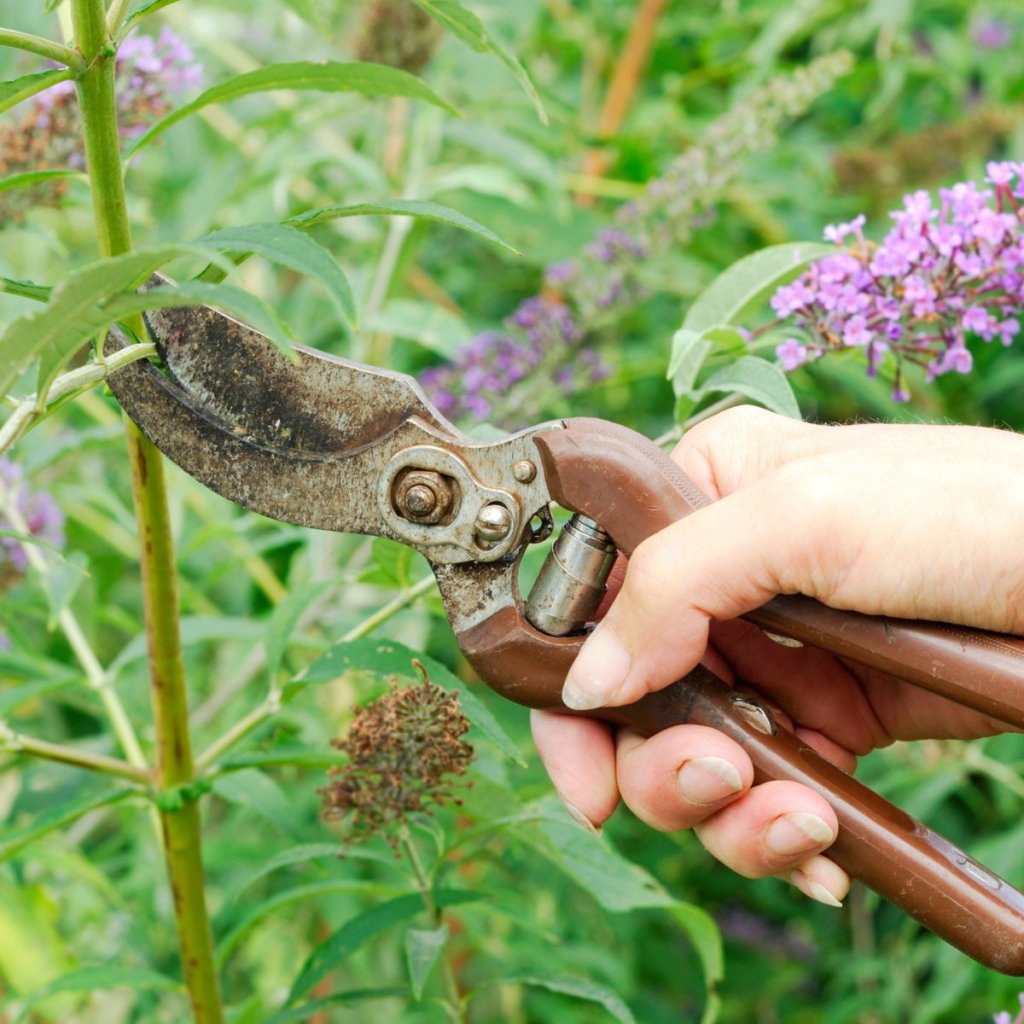
- Sharp bypass pruners for smaller stems
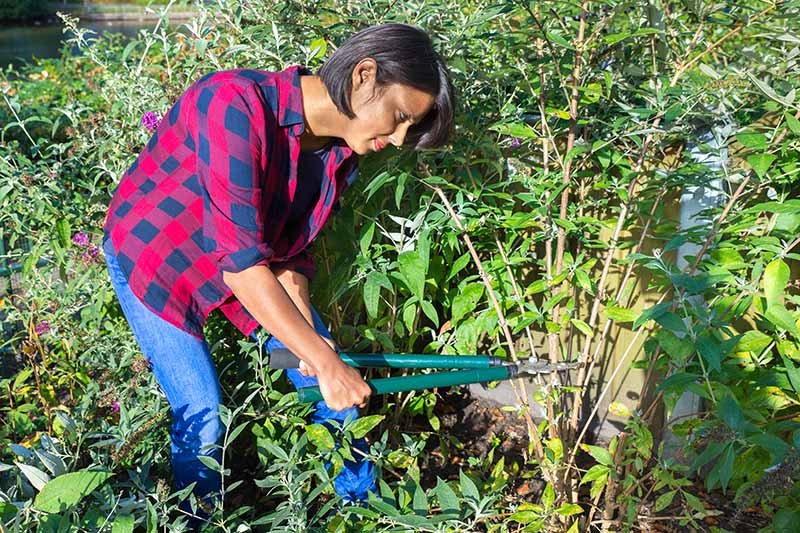
- Loppers for thicker branches
- Disinfectant to clean tools (prevents disease spread)
Step-by-Step Spring Pruning
Step 1: Assess the plant. Look for new growth at the base and along lower stems. Green buds or emerging leaves indicate living tissue.
Step 2: Remove dead wood. Cut back any stems that show no signs of life. Dead stems will be brown, brittle, and have no green inside when scratched.
Step 3: Choose your pruning intensity. For most butterfly bushes:
- Cut back to 12-18 inches from the ground for a medium prune
- Cut back to 6-12 inches for a hard prune (produces more vigorous growth)
- Or simply thin and shape if the plant has good structure
Step 4: Make clean cuts. Cut just above an outward-facing bud at a 45-degree angle. This encourages outward growth and better air circulation.
Step 5: Clean up. Remove all pruned material from the area to prevent disease and pest issues.
Pruning by Plant Age
Young plants (1-2 years): Light pruning only. Focus on shaping and removing any damaged or crossing branches.
Established plants (3+ years): Can handle harder pruning. Many gardeners cut back to 12 inches annually to maintain size and encourage fresh, vigorous growth.
Overgrown or neglected plants: Can be rejuvenated by cutting back hard, even to near ground level. The plant will regrow from the base.

Regional Considerations
Cold Climates (Zones 5-6)
In colder regions, butterfly bushes often die back significantly over winter. The plant may appear completely dead above ground. Don’t give up – wait until late spring to see if new growth emerges from the base. These plants are often more cold-hardy in the roots than in the stems.
Pruning approach: In cold climates, you’ll likely be cutting back to near ground level each spring, removing all the winter-killed stems.
Moderate Climates (Zones 7-8)
Plants may retain more of their structure through winter. You have more flexibility in pruning intensity.
Pruning approach: Cut back by one-third to one-half, or harder if you want to control size.
Warm Climates (Zones 9+)
Butterfly bushes may remain semi-evergreen. Less dramatic pruning is needed.
Pruning approach: Light to moderate pruning to shape and remove spent flowers. Can prune more heavily if plant becomes overgrown.
Dwarf and Compact Varieties
Modern dwarf butterfly bush varieties (like the Lo & Behold or Pugster series) require different treatment than their larger cousins:
- Generally need less aggressive pruning
- Focus on shaping and removing dead wood
- Light trimming after each flush of blooms encourages reblooming
- Still benefit from waiting until spring for major pruning
Common Pruning Mistakes to Avoid
- Pruning too early in spring: A late freeze can damage tender new growth. Wait until the danger of hard frost has passed.
- Pruning in fall: Removes winter protection and stimulates vulnerable new growth.
- Not pruning at all: Butterfly bushes become leggy and flower less abundantly without annual pruning.
- Pruning too late: If you wait until the plant is actively growing, you’ll cut off potential flowers.
- Using dull tools: Causes ragged cuts that heal slowly and invite disease.
Quick Reference: Butterfly Bush Pruning Calendar
| Season | What to Do |
|---|---|
| Spring | Major pruning; remove winter-killed wood; shape plant |
| Summer | Deadhead spent flowers; light shaping if needed |
| Fall | Light cleanup only; no hard pruning; stop fertilizing |
| Winter | Leave plant alone; old growth protects crown |
A Note on Invasiveness
In some regions, butterfly bush can self-seed and become invasive. To reduce this risk:
- Deadhead spent flowers before they form seeds
- Choose sterile or low-fertility cultivars
- Check with your local extension office about invasive status in your area
- Consider native alternatives like butterfly weed (Asclepias) if invasiveness is a concern
Final Thoughts
The question “do you cut a butterfly bush back in the fall?” has a clear answer: save the major pruning for late winter or early spring. While it’s tempting to tidy up your garden in autumn, butterfly bushes benefit from leaving their old growth in place through winter.
By waiting until you see new growth in spring, you’ll be able to prune with confidence, knowing exactly what needs to come off and what should stay. Your patience will be rewarded with a vigorous plant that produces abundant flowers all season long.
For more detailed pruning guidance, visit Epic Gardening and The Spruce.