Why Grow Caladiums?
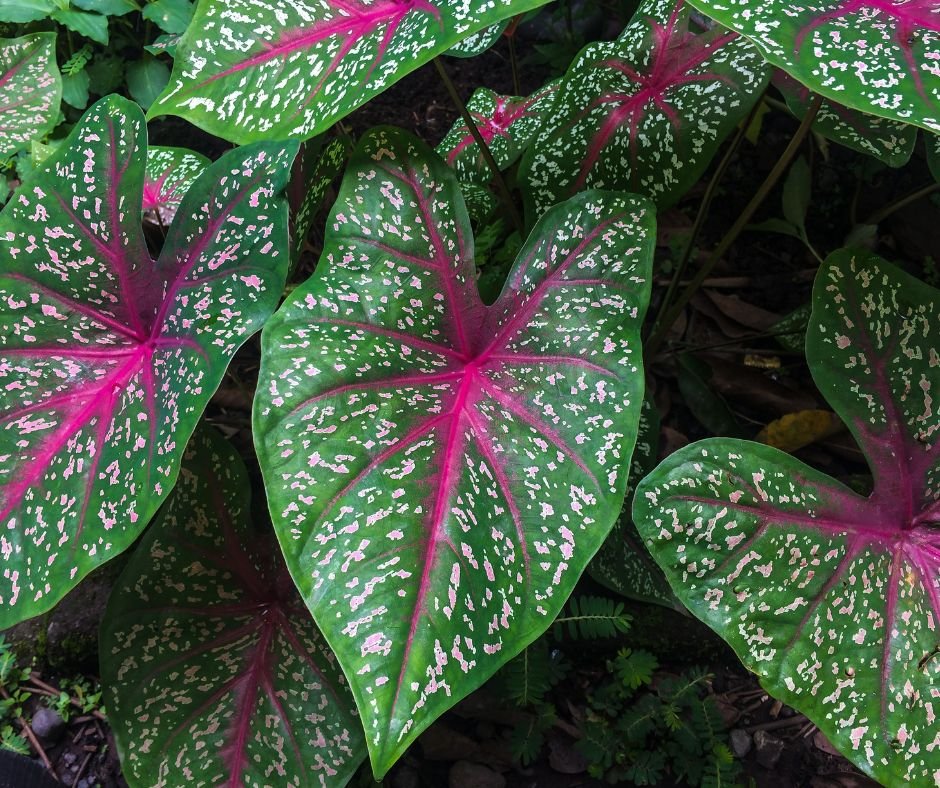
Caladiums are among the most stunning foliage plants you can grow in your garden or home. With their heart-shaped leaves in combinations of white, pink, red, and green, they bring a tropical flair that few other plants can match. Unlike flowers that bloom for just a few weeks, caladiums provide months of colorful display from spring through fall.
The good news? Growing caladium bulbs isn’t complicated once you understand their basic needs. This guide will walk you through everything you need to know to successfully grow and care for these beautiful plants.
When to Plant Caladium Bulbs
Timing is everything with caladiums. These tropical plants love warmth, and planting too early is one of the most common mistakes gardeners make.
The best time to plant caladium bulbs is after the last frost in spring, when both air and soil temperatures have warmed up sufficiently. Here’s what to look for:
- Soil temperature: At least 60-70°F (16-21°C), ideally 65°F (18°C) or warmer
- Air temperature: Consistently above 60°F (16°C) during the day
- Soil moisture: Soil should be workable, not waterlogged from spring rains
Planting in cold, wet soil is a recipe for disaster. Caladium bulbs will simply sit there and may rot before they ever get a chance to sprout. If you live in a region with cool springs, you can start bulbs indoors 4-6 weeks before your last frost date, then transplant them outside once conditions are right.
Choosing the Right Location
Caladiums are native to the tropical forests of South America, which tells you a lot about their preferred growing conditions. They naturally grow under the canopy of taller trees, receiving filtered sunlight and protection from harsh afternoon rays.
Light Requirements
Most caladium varieties thrive in partial shade to bright, indirect light. The ideal spot receives:
- 2-4 hours of morning sun with afternoon shade
- Or 4-6 hours of dappled sunlight throughout the day
An interesting fact: caladiums often develop more vibrant colors when grown in shade. Too much direct sun can cause leaf edges to brown and colors to fade.
That said, some newer varieties have been bred for greater sun tolerance. If you want to grow caladiums in a sunnier spot, look for varieties labeled as “sun-tolerant” or “sun-loving.” Just be prepared to water more frequently.
How to Plant Caladium Bulbs
Soil Preparation
Caladiums need soil that holds moisture but drains well. They dislike two extremes equally: waterlogged soil that causes rot, and bone-dry soil that stunts growth.
For garden beds:
- Work in compost or aged manure to improve soil structure
- In heavy clay soil, consider raised beds or planting on a slight mound
- In sandy soil, add organic matter to improve water retention
For containers:
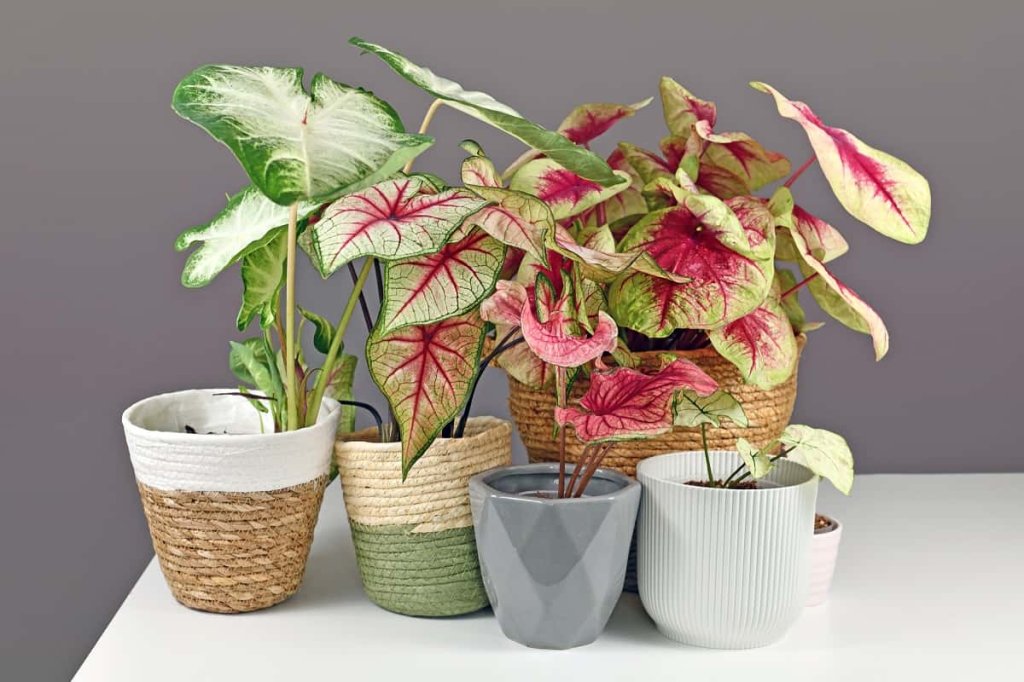
- Use a high-quality potting mix
- Ensure containers have drainage holes
- Choose pots at least 6-8 inches deep to accommodate root development
Planting Depth and Spacing
Follow these simple steps when planting:
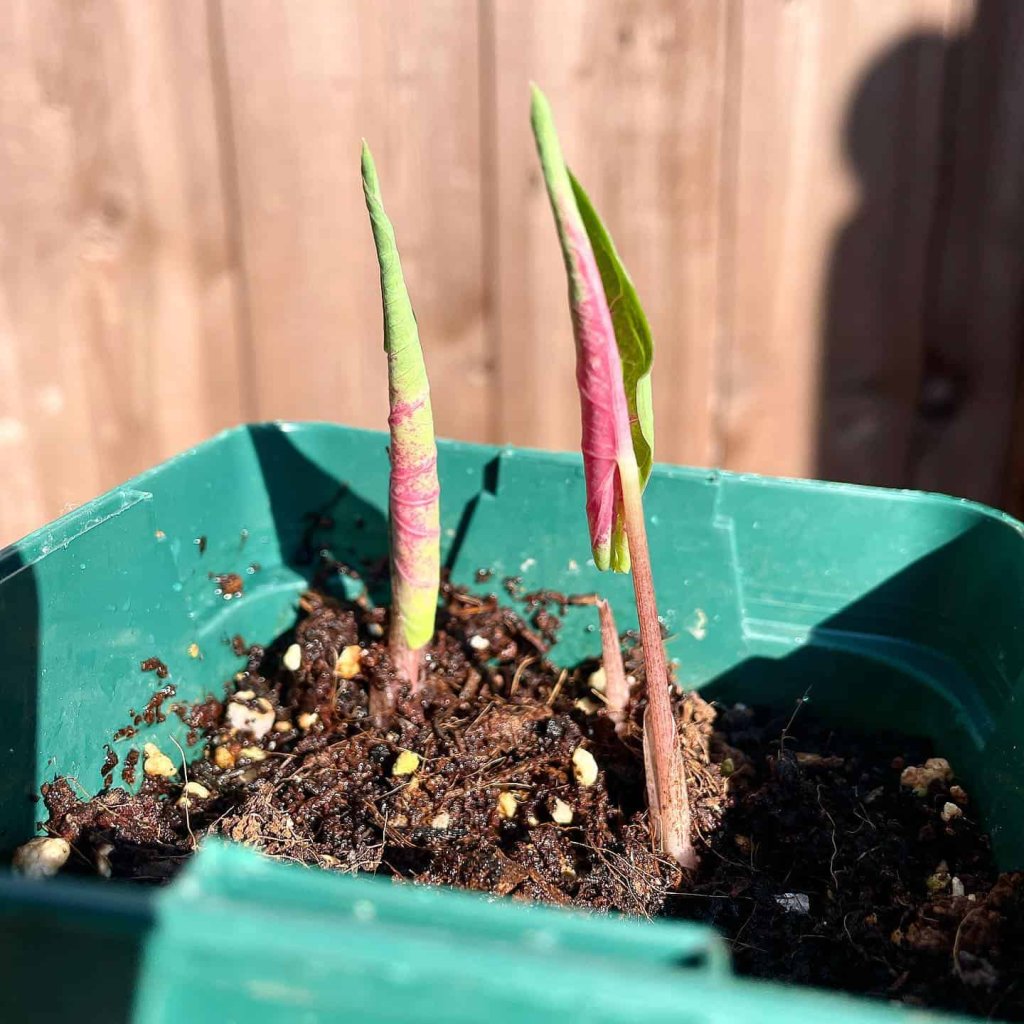
- Identify the top: Look for small bumps, bumps, or “eyes” on the bulb – these should face upward. If you can’t tell, plant the bulb on its side; the plant will figure it out.
- Dig the hole: Plant bulbs 1.5-2 inches deep.
- Space properly: Allow 8-12 inches between bulbs for air circulation and room to grow.
- Cover and water: Fill in with soil and water gently to settle the soil around the bulb.
Watering Your Caladiums
Getting watering right is crucial for caladium success. Think of it as maintaining a “moist but not soggy” balance.
After planting: Keep the soil evenly moist but not waterlogged. Bulbs are establishing roots and need consistent moisture.
During active growth:
- Check soil moisture by touching the surface – it should feel slightly damp
- Water when the top inch begins to dry out
- Water deeply, allowing moisture to reach the root zone
- Water in the morning so leaves can dry before evening
Pro tip: Apply a 2-inch layer of mulch around plants to help retain soil moisture, keep roots cool, and suppress weeds. This significantly reduces how often you need to water.
Remember: caladiums enjoy consistent moisture, but they’re not aquatic plants. Soggy soil leads to bulb rot, the number one killer of caladiums.
Fertilizing for Best Color
Caladiums aren’t heavy feeders, but a little nutrition helps them produce their best foliage.
Recommended approach:
- At planting: Mix a slow-release fertilizer into the soil
- During growth: Apply a balanced liquid fertilizer once a month, or use slow-release granules 1-2 times per season
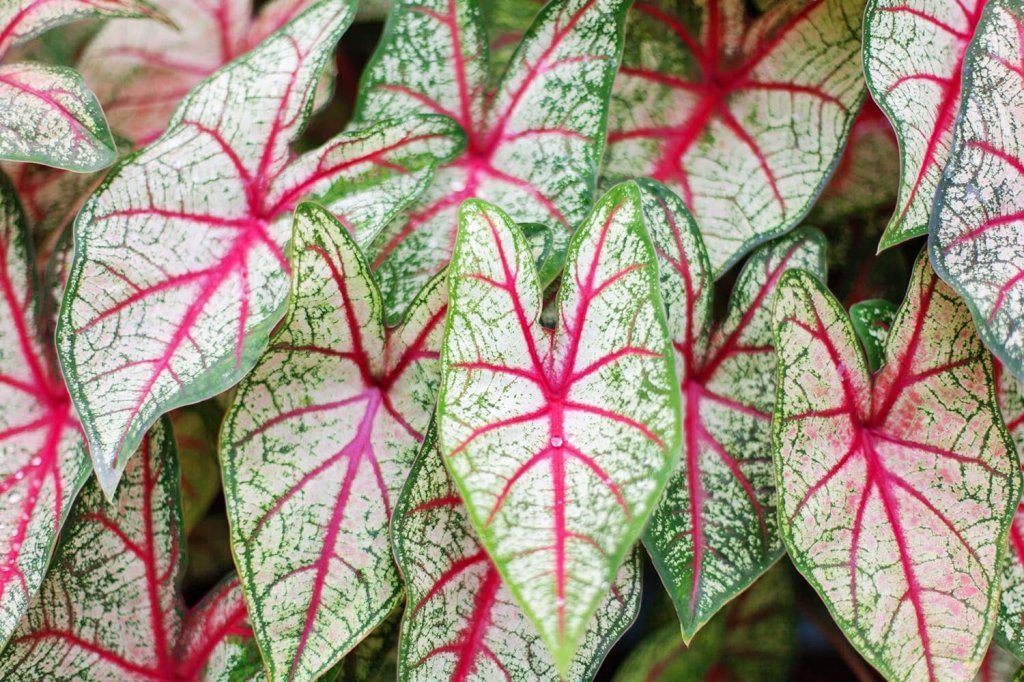
Important caution: Too much fertilizer, especially nitrogen, can cause leaves to turn greener and lose their colorful patterns. If your pink and white caladiums are becoming predominantly green, cut back on feeding.
As a general rule: light, regular feeding produces better results than heavy applications.
Overwintering Caladium Bulbs
In USDA zones 9-11, caladiums can often stay in the ground year-round with a thick layer of mulch for protection. But in colder regions, you’ll need to dig and store the bulbs before frost arrives.
When and How to Dig Bulbs
In fall, as temperatures cool, caladiums naturally begin to go dormant. Leaves will yellow and collapse – this is normal.
Steps for overwintering:
- Wait for natural dieback: Let foliage yellow and wither naturally, which allows energy to return to the bulb.
- Dig carefully: Use a garden fork to lift bulbs, being careful not to damage them.
- Clean and dry: Shake off excess soil and let bulbs dry in a warm, ventilated area for about a week.
- Trim: Remove dried foliage and any loose roots.
- Store properly: Place bulbs in dry peat moss, vermicite, or sawdust in a container with air holes.
- Temperature: Above 60°F (16°C) – cool but not cold
- Humidity: Low to moderate
- Light: Not important during dormancy
Storage conditions:
Check stored bulbs occasionally and discard any that show signs of rot or shriveling.
Troubleshooting Common Problems
Bulbs Not Sprouting
Likely causes: Soil too cold, planted too deep, or bulb rot from wet soil.
Solution: Wait for warmer soil temperatures; ensure good drainage.
Leaves Turning Brown on Edges
Likely causes: Too much sun, inconsistent watering, or fertilizer burn.
Solution: Move to a shadier location; maintain even soil moisture; keep fertilizer off leaves.
Colors Fading or Leaves Turning Green
Likely causes: Too much shade (for some varieties), too much nitrogen fertilizer, or natural aging.
Solution: Adjust light levels; reduce fertilizer.
Leaves Wilting Despite Wet Soil
Likely cause: Root or bulb rot from overwatering.
Solution: Improve drainage; reduce watering frequency; affected bulbs may not recover.
A Note on Safety
Caladiums contain calcium oxalate crystals, which are toxic if ingested. The sap can also irritate skin. Keep plants away from curious pets and children, and wash hands after handling bulbs or foliage.
Quick Reference: Growing Caladiums
| Factor | Requirement |
|---|---|
| Planting Time | After last frost, soil 60-70°F+ |
| Light | Partial shade to filtered sun |
| Soil | Rich, moist, well-draining |
| Planting Depth | 1.5-2 inches deep |
| Spacing | 8-12 inches apart |
| Water | Keep evenly moist, not soggy |
| Fertilizer | Light feeding monthly during growth |
| Hardiness | USDA zones 9-11 (dig in colder zones) |
Final Thoughts
Caladiums reward gardeners with months of spectacular color from relatively simple care. The keys to success are warm soil at planting time, consistent moisture without waterlogging, and protection from harsh afternoon sun.
Whether you’re adding them to a shade garden, brightening a patio with containers, or creating a tropical-themed landscape, these versatile plants deliver stunning results. Start with good quality bulbs, follow the basics outlined here, and you’ll soon understand why caladiums have become favorites among gardeners worldwide.
For more information on growing caladiums, visit these trusted resources: University of Florida IFAS Extension, Classic Caladiums, and the National Plant of the Year guide.