Introduction to Tree-Dwelling Fungi
Walking through a forest, you’ve likely noticed mushrooms growing directly from tree trunks, branches, and stumps. These fascinating organisms are known as bracket fungi, shelf fungi, or polypores—a diverse group of fungi that play crucial ecological roles in forest ecosystems worldwide. Unlike the classic ground-growing mushrooms most people are familiar with, tree-growing fungi have unique characteristics, life cycles, and ecological functions that make them some of the most important decomposers in nature.
These fungi, scientifically classified in the phylum Basidiomycota, are characterized by their tough, woody or leathery fruiting bodies that attach directly to wood substrates. While some tree-growing mushrooms cause concern for tree health, most are harmless saprophytes that simply break down dead wood. Understanding these remarkable organisms helps gardeners, foresters, and nature enthusiasts appreciate their vital ecological role while making informed decisions about tree care.
Types of Mushrooms That Grow on Trees
1. Bracket Fungi (Polypores)
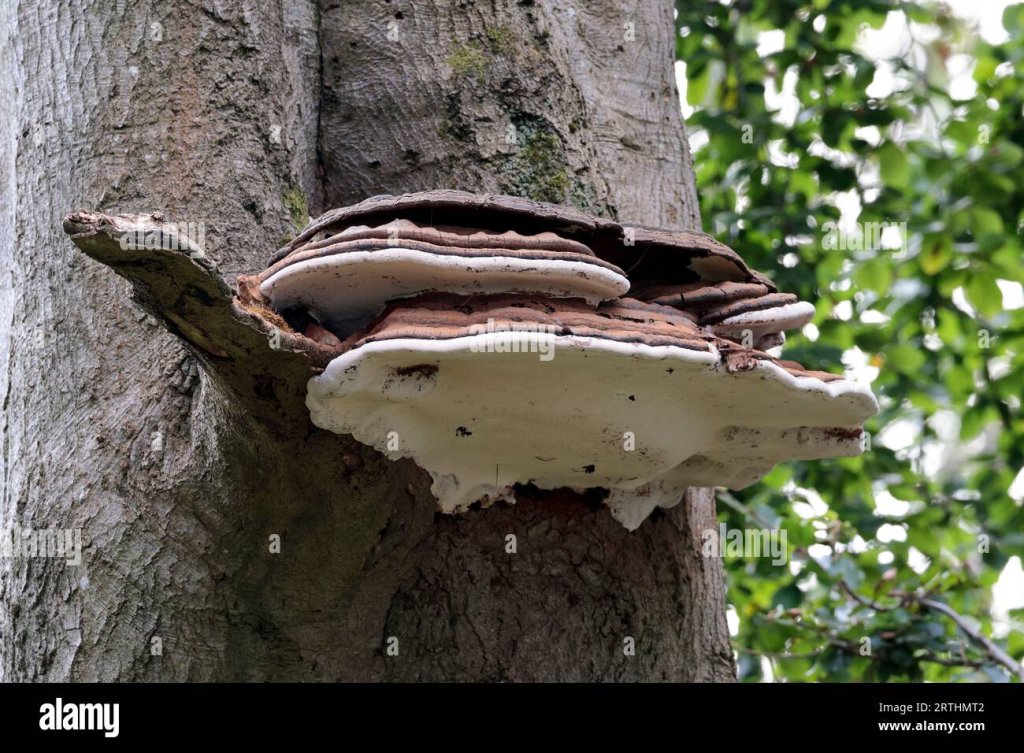
Bracket fungi, also called polypores or pore fungi, are the most common type of mushroom found growing on trees. Their name comes from their bracket-like appearance—shelf-shaped fruiting bodies that project outward from the tree’s surface. These fungi produce spores through tiny pores on their undersurface rather than gills.
Key Characteristics:
- Shelf-like or hoof-shaped fruiting bodies
- Often tough, woody, or leathery texture
- Produce spores through pores on the underside
- Can grow quite large—some species reach over 2 feet across
- Long-lived; some conks persist for decades
- Typically lack the typical mushroom stem
2. Shelf Fungi
The term “shelf fungi” is essentially interchangeable with bracket fungi, referring to those species that form horizontally projecting shelves from tree bark. These structures angle upward from their attachment point, creating a surface where spores can fall freely downward to disperse in the wind.
3. Conks
“Conk” is another common name for bracket fungi, particularly used for those species that form hard, woody, perennial fruiting bodies. Conks grow larger each year, adding new layers of spore-producing tissue, similar to the way trees add annual growth rings.
4. Gilled Mushrooms on Trees
While less common than polypores, some mushrooms with traditional gills grow on trees. These include oyster mushrooms, lion’s mane, and various species of Pleurotus. These are typically softer and more short-lived than bracket fungi.
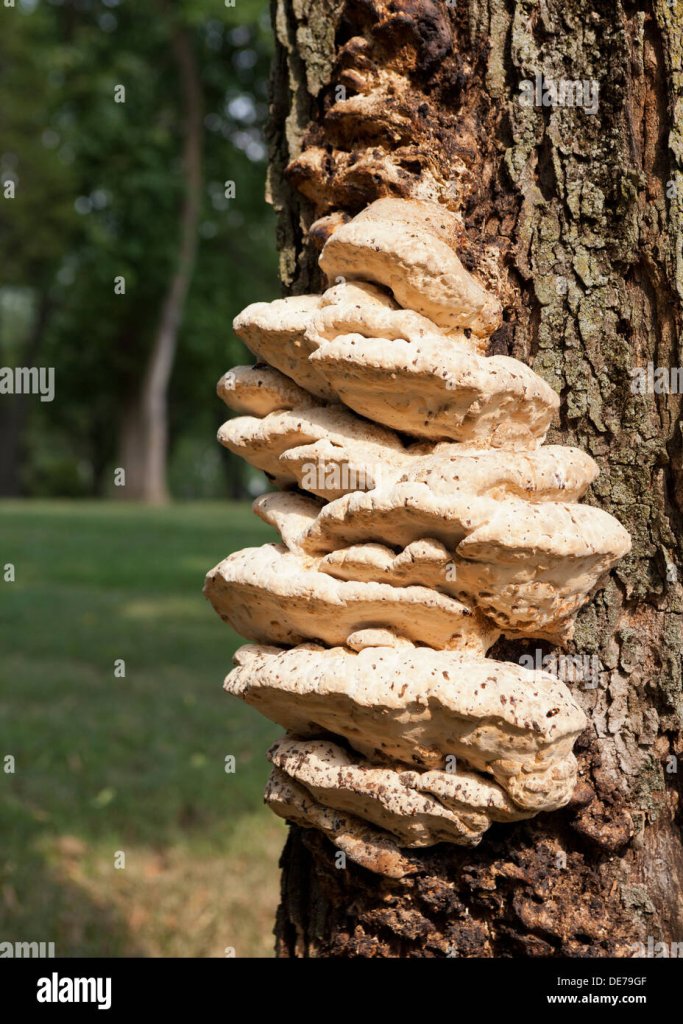
Common Tree-Dwelling Fungi Species
Artist’s Conk (Ganoderma applanatum)
One of the most recognizable bracket fungi, distinguished by its large, flat, brown upper surface and white pore surface underneath that bruises brown when scratched (hence “artist’s conk”). Found on many hardwood species, particularly oaks and maples.
- Size: Up to 30 inches across
- Appearance: Brown upper surface with white margins
- Habitat: Dead or dying hardwood trees
- Edibility: Not edible—too woody
Turkey Tail (Trametes versicolor)
A colorful, small bracket fungus known for its zones of brown, tan, and blue-green colors. One of the most common polypores worldwide, found on virtually any type of dead wood.
- Size: 1-4 inches across
- Appearance: Multicolored concentric zones, velvety upper surface
- Habitat: Dead hardwood logs and stumps
- Medicinal use: Studied for immune-supporting properties
Reishi (Ganoderma lucidum)
Known as the “mushroom of immortality” in traditional Asian medicine. This shiny, reddish-brown bracket fungus grows on hardwood trees and is highly prized for its supposed health benefits.
- Size: 2-8 inches across
- Appearance: Shiny, varnished-looking reddish-brown surface
- Habitat: Dead or dying hardwoods
- Uses: Traditional medicine, teas, supplements
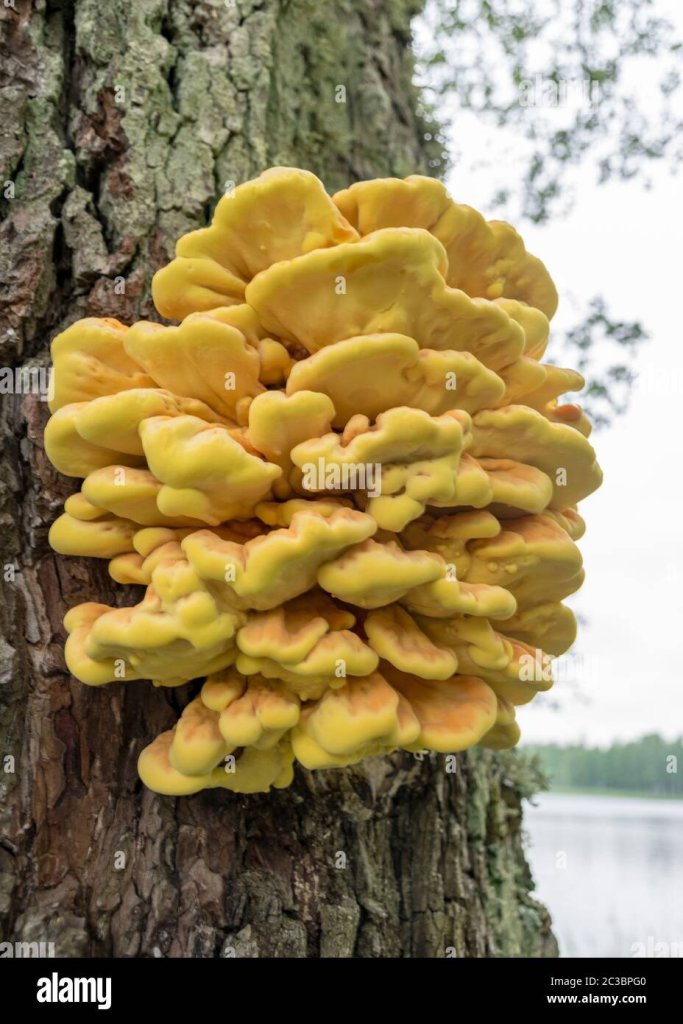
Chicken of the Woods (Laetiporus sulphureus)
A bright orange-yellow shelf fungus that’s actually edible when young and fresh. Known for its chicken-like texture and flavor, this fungus grows on both living and dead trees.
- Size: Up to 24 inches across in overlapping clusters
- Appearance: Bright orange-yellow, fan-shaped shelves
- Habitat: Oaks, other hardwoods, occasionally conifers
- Edibility: Choice edible when young and tender
Oyster Mushroom (Pleurotus ostreatus)
One of the most commercially cultivated mushrooms, also common in the wild. Forms shelf-like clusters on dead hardwood trees and logs.
- Size: 2-8 inches across
- Appearance: Fan or oyster-shaped caps, gray to brown
- Habitat: Dead hardwood trees and logs
- Edibility: Excellent culinary mushroom
Lion’s Mane (Hericium erinaceus)
Unique among tree fungi, this species forms cascading white icicle-like structures rather than shelves. Growing on hardwoods, particularly oaks and maples, it’s both edible and studied for potential neurological benefits.
- Size: Up to 12 inches across
- Appearance: White, cascading spines
- Habitat: Wounds on living hardwoods
- Edibility: Choice edible, lobster-like flavor
Chaga (Inonotus obliquus)
Not a typical bracket fungus, chaga forms a black, charcoal-like growth on birch trees. Highly valued in traditional medicine and increasingly popular as a health supplement.
- Size: Variable, can be quite large
- Appearance: Black, crusted, irregular shape
- Habitat: Primarily birch trees in northern climates
- Uses: Traditional medicine, teas, supplements
The Ecological Role of Tree Fungi
Decomposition and Nutrient Cycling
Bracket fungi are nature’s recyclers. They break down the tough cellulose and lignin in wood, converting complex organic matter into simpler compounds that enrich forest soils. Without these fungi, dead trees would persist for centuries rather than decades, and forests would become choked with woody debris.
White Rot vs. Brown Rot
Tree fungi employ different decay strategies:
White Rot Fungi
- Decompose both cellulose and lignin
- Leave wood bleached, stringy, and white
- Most bracket fungi are white rot species
- Play crucial role in nutrient cycling
Brown Rot Fungi
- Decompose primarily cellulose, leaving lignin
- Create brown, crumbly wood residue
- Less common among bracket fungi
- Important for soil carbon storage
Habitat Creation
Fungi-decayed wood creates crucial habitat for countless organisms:
- Insects and their larvae
- Salamanders and frogs
- Small mammals
- Nesting birds
- Other fungi and bacteria
Are Tree Mushrooms Dangerous to Trees?
Parasitic vs. Saprophytic Fungi
The impact of tree fungi depends on their relationship with the host tree:
Saprophytic Fungi (Decomposers)
- Feed only on dead wood
- Do not harm living trees
- Appear after tree death or on dead branches
- Beneficial to ecosystem
Parasitic Fungi (Pathogens)
- Attack living tree tissue
- Can cause decay, weakening, and death
- Often enter through wounds
- May spread between trees
Facultative Parasites
- Can act as both decomposers and parasites
- Often attack stressed or weakened trees
- Most tree fungi fall into this category
- Significance depends on tree health
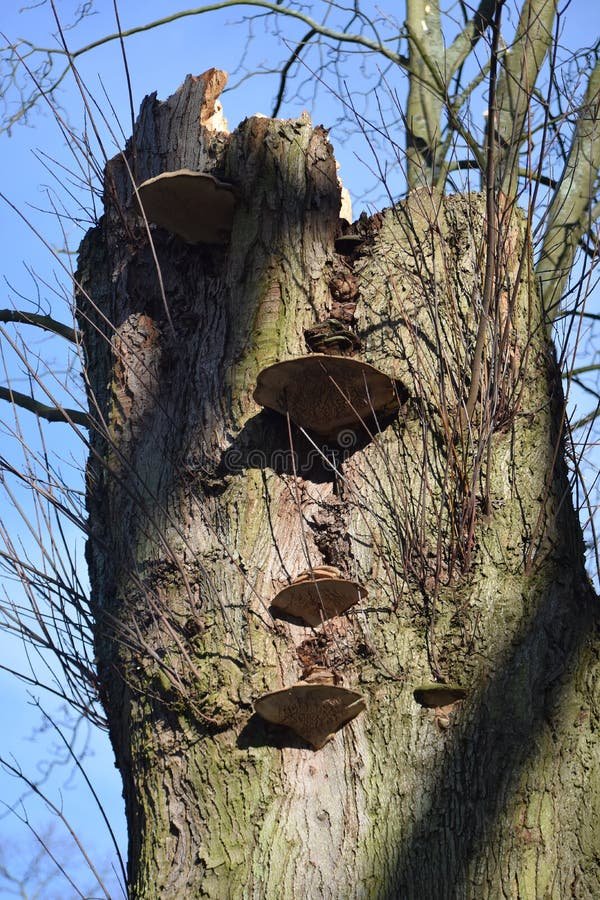
Signs of Harmful Fungal Infection
Not all fungi growing on trees indicate a problem, but certain signs suggest active decay:
Warning Indicators:
- Conks on living trees: May indicate internal decay
- Multiple fruiting bodies: Suggests extensive decay
- Basal conks at ground level: Often indicate root rot
- Dieback in crown: Combined with fungal conks suggests serious problems
- Cavities or hollows: Evidence of advanced decay
- Mushroom growth from wounds: Indicates decay entering through injury
Managing Tree Fungi in Landscapes
When to Be Concerned
- Fungi appearing on young, apparently healthy trees
- Rapid increase in number or size of conks
- Conks at the base of trees near structures
- Large trees showing both conks and dieback
- Trees with significant decay that could fall
When NOT to Worry
- Small shelf fungi on dead branches (prune the branch)
- Polypores on tree stumps or fallen logs
- Scattered conks on mature trees without other symptoms
- Seasonal mushroom appearance after rain
Prevention Strategies
- Avoid wounding tree trunks and roots
- Proper pruning techniques
- Maintain tree vigor through proper watering and mulching
- Remove severely decayed trees near structures
- Consult a certified arborist for assessment
Should You Remove Tree Fungi?
Removing visible conks or mushrooms does not eliminate the fungus. The main body of the fungus (mycelium) lives inside the wood, where it cannot be reached. Removing fruiting bodies may reduce spore spread but won’t cure the infection. Focus on tree health and structural assessment instead.
Edibility of Tree Mushrooms
Important Warning
Never eat any wild mushroom unless you are 100% certain of its identification. Many tree fungi are inedible or toxic, and even edible species can be dangerous if misidentified or collected from contaminated areas.
Edible Species (When Properly Identified)
- Chicken of the Woods (Laetiporus sulphureus)
- Oyster Mushroom (Pleurotus ostreatus)
- Lion’s Mane (Hericium erinaceus)
- Enoki (Flammulina velutipes)
Inedible or Toxic Species
- Most Ganoderma species (too woody)
- Turkey Tail (tough and leathery)
- Many polypores (indigestible)
- Any species you cannot positively identify
Collection Guidelines
- Only collect from areas free of pollution and pesticides
- Harvest young, fresh specimens
- Learn from experienced foragers or mycologists
- Use multiple identification features
- When in doubt, throw it out
Identifying Tree Fungi
Key Identification Features
Cap/Surface Features:
- Color and color patterns (zoned, solid, mottled)
- Texture (smooth, hairy, scaly, velvety)
- Shape (fan, semicircular, hoof-shaped, irregular)
- Presence of zones or ridges
Underside Features:
- Pore surface vs. gills vs. teeth
- Pore size and shape
- Color of pore surface
- Changes when bruised
Attachment:
- Directly attached to wood
- Short stem-like base
- How shelves attach to trunk
Host Tree:
- Hardwood vs. conifer
- Living vs. dead tree
- Specific tree species (oak, birch, etc.)
Growth Pattern:
- Solitary or clustered
- Overlapping shelves
- Single large conk
Fascinating Facts About Tree Fungi
- Age determination: Some conks add annual growth rings, allowing scientists to determine their age
- Largest organism: A honey fungus (Armillaria) in Oregon covers 3.7 square miles and is thousands of years old
- Medicinal potential: Many bracket fungi are studied for immune-modulating and anti-cancer properties
- Bioremediation: Some fungi can break down pollutants and are used in environmental cleanup
- Spore production: A single large conk can release billions of spores daily
- Wood modification: “Spalted wood” valued by woodworkers is created by fungal pigmentation
Conclusion
Mushrooms that grow on trees—bracket fungi, shelf fungi, and polypores—are remarkable organisms that play essential roles in forest ecosystems. While some can cause concern when appearing on valuable landscape trees, most are simply nature’s recyclers, breaking down dead wood and returning nutrients to the soil. Understanding the difference between harmless decomposers and serious pathogens helps gardeners and tree owners make informed decisions about tree care.
These fungi deserve appreciation rather than fear. They break down wood that nothing else can digest, create habitat for countless organisms, and produce compounds of medicinal interest. Whether you’re a forager seeking edible species, a gardener concerned about tree health, or simply a nature enthusiast, tree-dwelling fungi offer endless fascination.
The next time you spot a shelf fungus on a tree, take a moment to appreciate this ancient organism—part of a lineage that has been recycling wood for over 400 million years, making forests possible.
This article is for educational purposes. Never consume wild mushrooms without expert identification. For tree health concerns, consult a certified arborist.