The Simple Answer: It Looks Like a Potato
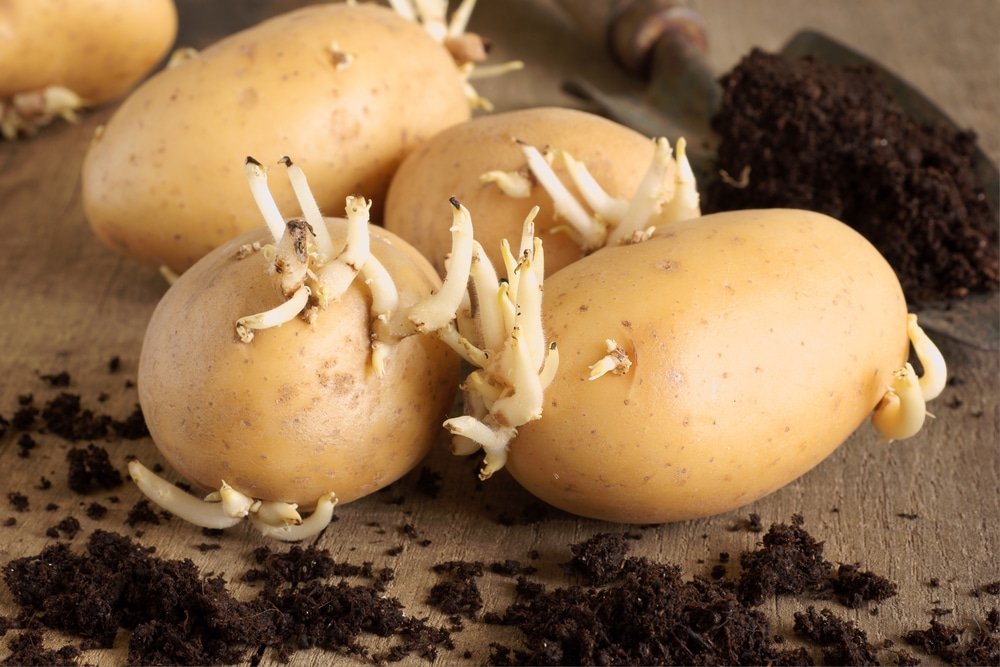
If you’re wondering what a seed potato looks like, here’s the straightforward answer: a seed potato looks just like a regular potato—in fact, it is a regular potato. Unlike most vegetables that grow from tiny seeds, potatoes are typically grown from other potatoes. A seed potato is simply a potato that has been selected, prepared, and planted to grow new potato plants.
However, there’s more to the story. Understanding what makes a good seed potato, how to identify quality ones, and the difference between seed potatoes and true potato seeds will help you succeed in your garden.
What Exactly Is a Seed Potato?
A seed potato is a tuber that has been grown specifically for replanting to produce a new potato crop. While they look identical to eating potatoes, seed potatoes differ in important ways:
Certified Disease-Free
Commercially sold seed potatoes are certified to be free from diseases that can devastate crops. This certification process involves laboratory testing and careful growing conditions. Store-bought eating potatoes may carry diseases that won’t harm humans but can ruin your potato harvest.
Selected for Vigor
Seed potatoes are selected from healthy, productive plants. They’re chosen for their ability to produce strong, disease-resistant offspring with good yields.
Properly Stored
Seed potatoes are stored under specific conditions to maintain their viability and ensure they’re ready to sprout when planting time arrives.
Visual Characteristics of Quality Seed Potatoes
When selecting seed potatoes, look for these characteristics:
Size
- Ideal: About the size of a chicken egg (2-3 ounces or 50-85 grams)
- Small potatoes: Can be planted whole
- Large potatoes: Should be cut into pieces with 2-3 “eyes” each
Appearance
- Firm and solid (not soft, wrinkled, or shriveled)
- No cuts, bruises, or damage
- No signs of rot or decay
- Natural skin color appropriate for the variety
Sprouts (Eyes)
- Visible “eyes” or small indentations where sprouts will emerge
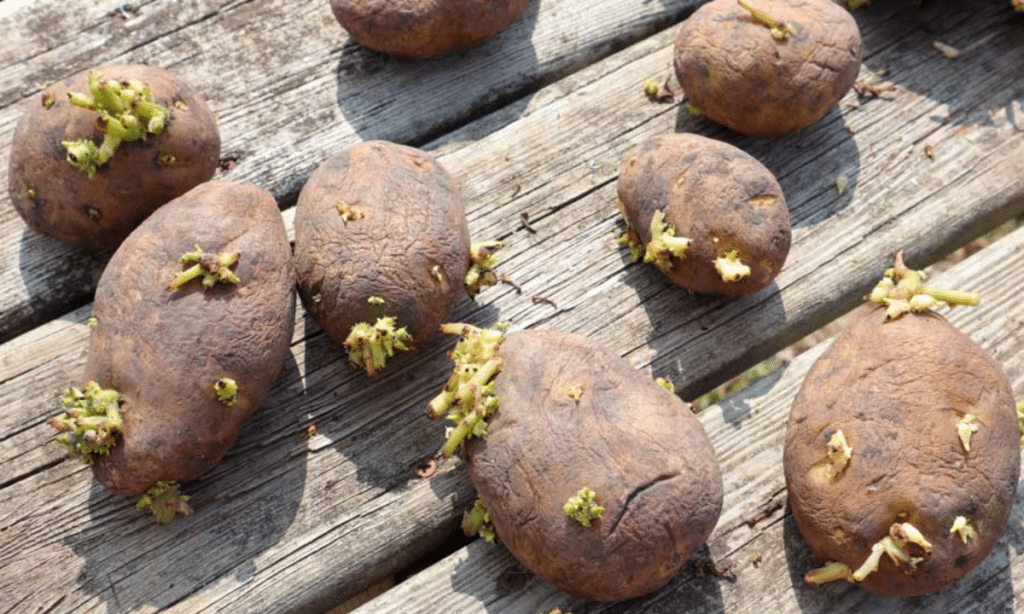
- Short, stubby sprouts are ideal (called “chitting”)
- Avoid potatoes with long, pale, spindly sprouts
The “Eyes” Have It: Understanding Potato Sprouts
The most distinctive feature of a seed potato is its “eyes”—small indentations on the skin where sprouts emerge. Each eye can produce multiple sprouts, and each sprout can develop into a new potato plant. Here’s what you need to know:
What Are Potato Eyes?
Eyes are actually dormant buds. When conditions are right, these buds “wake up” and begin growing into sprouts. A typical potato has 8-10 eyes, though this varies by variety.
Ideal Sprout Development
Before planting, you want your seed potatoes to develop short, sturdy sprouts:
- Length: 1-2 cm (0.5-1 inch) is ideal
- Color: Green or purple (depending on variety), not pale white
- Texture: Thick and sturdy, not thin and spindly
Chitting: Pre-Sprouting Your Seed Potatoes
Chitting is the process of encouraging seed potatoes to sprout before planting:
- Place seed potatoes in a cool (45-60°F / 7-15°C), bright location
- Position them with the “rose end” (most eyes) facing up
- Allow 2-4 weeks for sprouts to develop
- Plant when sprouts reach ideal size
Seed Potato vs. True Potato Seed: What’s the Difference?
Here’s where confusion often arises. There are actually two types of “potato seeds”:
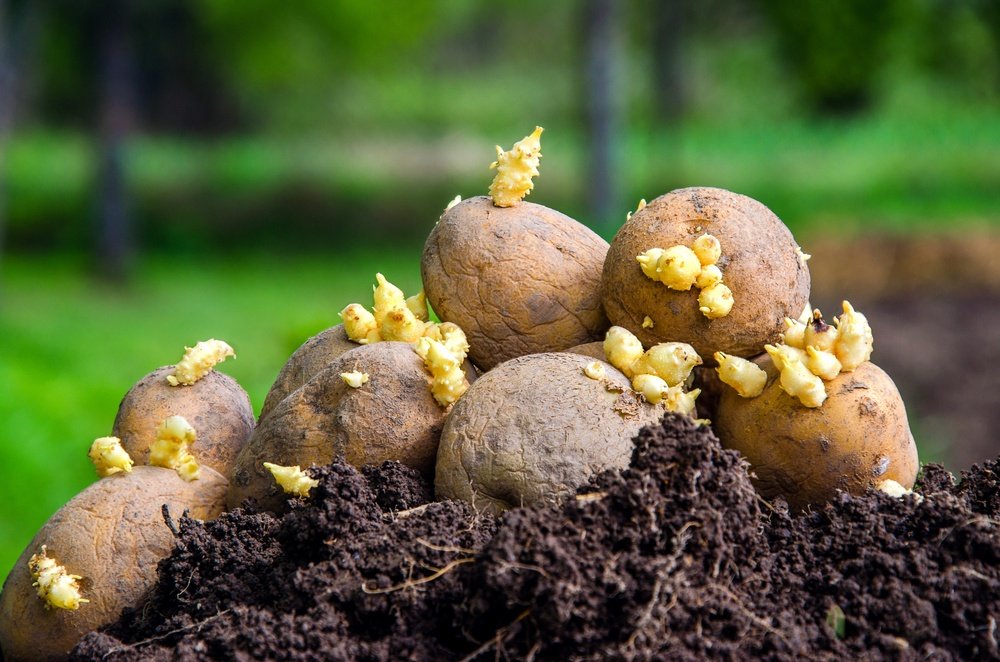
Seed Potatoes (Vegetative Propagation)
The most common method. Seed potatoes are tubers planted to grow new plants. This produces genetic clones of the parent plant, ensuring consistent varieties.
True Potato Seeds (Sexual Propagation)
Potato plants do produce actual seeds! These form in small green fruits that look like cherry tomatoes (but are toxic—never eat them). These tiny seeds are called True Potato Seeds (TPS):
- Appearance: Tiny, like tomato seeds—about 1-2 mm
- Color: Light tan to yellowish-brown
- Quantity: Hundreds per fruit
- Use: Mostly by breeders; not common for home gardeners
Why Seed Potatoes Are Preferred
Most gardeners use seed potatoes rather than true seeds because:
- Faster to harvest (seeds take a full season longer)
- Predictable results (genetic clones)
- More reliable yields
- Retains variety characteristics
How to Prepare Seed Potatoes for Planting
Whole vs. Cut Potatoes
- Small seed potatoes (under 2 inches): Plant whole
- Medium to large potatoes: Cut into pieces with 2-3 eyes each
Cutting Guidelines
- Use a clean, sharp knife
- Sanitize between cuts with rubbing alcohol or diluted bleach
- Cut pieces should be at least 1.5-2 inches across
- Each piece needs 2-3 eyes
- Let cut pieces “heal” for 1-3 days before planting
Healing Cut Potatoes
After cutting, let the pieces sit in a cool, dry, well-ventilated area:
- Allows cut surfaces to form a protective callus
- Reduces risk of rot in the ground
- Prevents soil-borne diseases from entering
Common Seed Potato Varieties and Their Appearance
Russet Varieties
- Brown, netted skin
- White flesh
- Oblong to rectangular shape
- Examples: Russet Burbank, Norkotah
Red Varieties
- Red to reddish-brown skin
- White or yellow flesh
- Round to oval shape
- Examples: Red Pontiac, Norland, Chieftain
Yellow/Gold Varieties
- Yellow or golden skin
- Yellow flesh
- Round to oval shape
- Examples: Yukon Gold, German Butterball
Fingerling Varieties
- Long, narrow, finger-like shape
- Various skin colors (red, yellow, purple)
- Often waxy texture
- Examples: Russian Banana, French Fingerling
Purple/Blue Varieties
- Deep purple or blue skin
- Purple, blue, or white flesh
- Various shapes
- Examples: All Blue, Purple Majesty
Where to Buy Quality Seed Potatoes
Best Sources
- Local garden centers: Often stock varieties suited to your region
- Seed companies: Wide selection of certified seed potatoes
- Farm supply stores: Bulk options available
- Online retailers: Many specialty varieties available
What to Avoid
- Grocery store potatoes (not certified disease-free)
- Potatoes treated with sprout inhibitors
- Soft, shriveled, or damaged potatoes
- Potatoes with long, spindly sprouts
Storing Seed Potatoes Before Planting
Ideal Conditions
- Temperature: 40-50°F (4-10°C)
- Light: Bright, indirect light (for chitting)
- Humidity: Moderate (not too damp)
- Ventilation: Good air circulation
Don’t Store With These
- Apples (ethylene gas promotes sprouting)
- Onions (can cause spoilage)
- In plastic bags (causes rot)
Signs Your Seed Potatoes Are Ready to Plant
Your seed potatoes are ready when:
- Sprouts are 1-2 cm long
- Sprouts are thick and sturdy
- Soil temperature is at least 45°F (7°C)
- Danger of hard frost has passed
- Ground is workable, not waterlogged
Quick Reference: Seed Potato Identification Checklist
| Feature | Good Seed Potato | Avoid |
|---|---|---|
| Texture | Firm, solid | Soft, wrinkled |
| Sprouts | Short, thick, colored | Long, pale, spindly |
| Eyes | Visible, multiple | Few or damaged |
| Surface | No cuts, rot, or mold | Cuts, soft spots, mold |
| Size | Egg-sized or larger | Tiny or shriveled |
| Source | Certified seed | Grocery store |
Conclusion
A seed potato looks remarkably like the potatoes you eat—because it is one. The key differences lie not in appearance but in certification, handling, and purpose. Quality seed potatoes are disease-free, properly stored, and selected for vigorous growth. They feature firm flesh, visible eyes, and ideally, short, sturdy sprouts from the chitting process.
Whether you’re planting whole small potatoes or cutting larger ones into pieces, understanding what makes a good seed potato sets the foundation for a bountiful harvest. Remember: invest in certified seed potatoes rather than grocery store potatoes to give your crop the best possible start.
With this knowledge, you can confidently identify, select, and prepare seed potatoes for your garden. Happy planting!
This article is for educational purposes. Always follow local growing guidelines and consult regional extension services for variety recommendations suited to your area.