The Vertical Canvas – Why Flowering Vines Transform Gardens
Ever wish you could wave a paintbrush and turn a blank fence into a living watercolor? Flowering vines are that brush. One season they’re timid seedlings; the next they’re skyscrapers of bloom, turning the garden’s forgotten third dimension—height—into a fireworks show. In this guide to the top flowering vines for your garden: best picks for vibrant blooms, we’ll match you with climbers that deliver maximum color for minimum drama, then show you exactly how to grow them like the pros. Expect candid plant profiles, a color-wheel cheat sheet, and the dirt on which vines behave and which ones brawl.
Top Recommended Flowering Vines for Gardens
Before we deep-dive, meet the all-stars you’ll soon be scrolling past in the plant aisle, wondering why your cart suddenly feels too small. Each of these eight vines has been chosen for Technicolor-level blooms, reasonable care (no diva greenhouse routines), and the ability to play nicely—or at least predictably—in U.S. and European gardens.
Vines Known for the Most Vibrant Blooms
Bougainvillea – “The Neon Billboard”
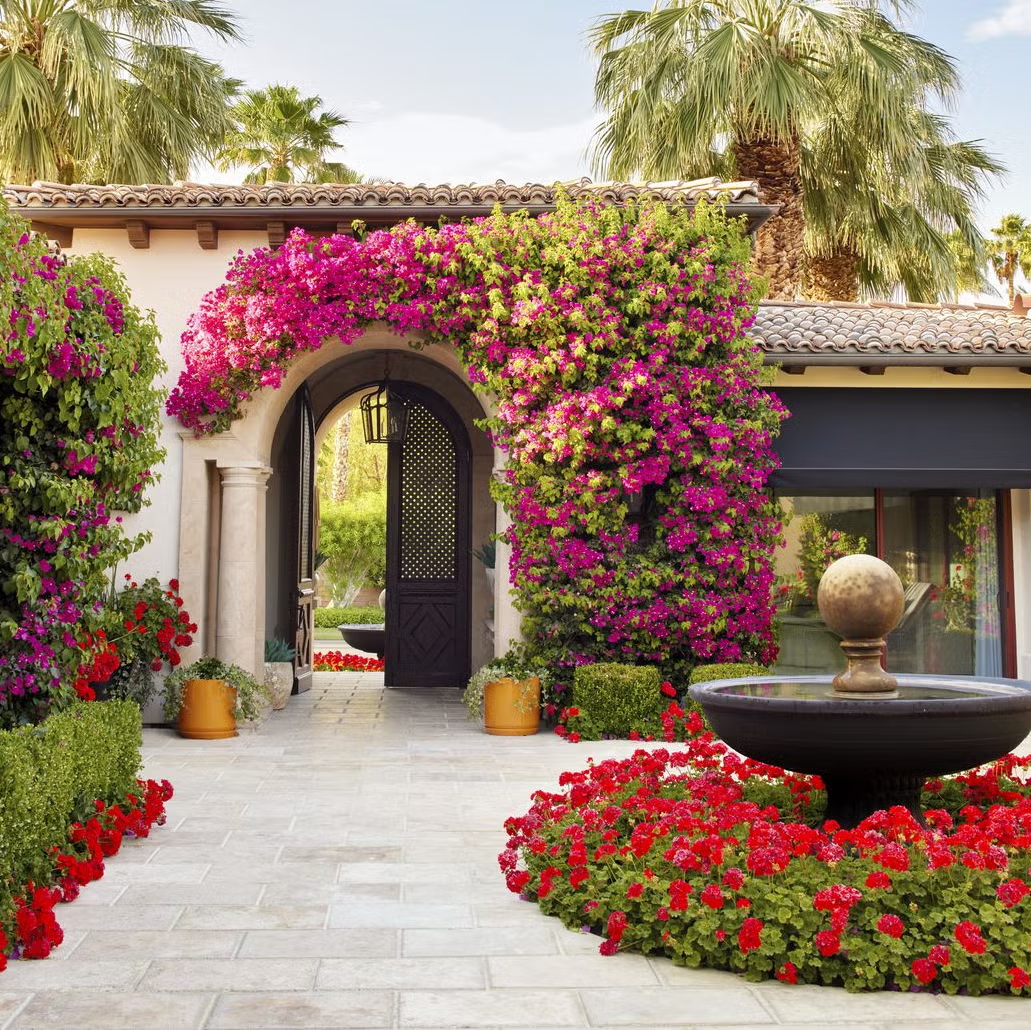
If Las Vegas were a plant, it would be bougainvillea. Those papery bracts—think hot magenta, tangerine, or electric lavender—aren’t petals at all; they’re colored leaves shouting, “Look at me!” Grow in full sun, keep roots slightly pot-bound, and you’ll get Technicolor cascades from spring to frost in zones 9-11. In cooler climates, park a dwarf variety in a patio pot and wheel it indoors for winter.
Clematis – “The Couture Dressmaker”
Clematis stitches together big, satiny flowers that could pass for haute couture fabric. Choose from early-spring montanas, summer giants like ‘Jackmanii’, or fall-blooming paniculatas. Give the vines cool, shaded roots and sun on their leaves; they’ll reward you with plate-sized blooms in royal purples, icy blues, or soft blush. Most thrive down to zone 4.
Trumpet Vine (Campsis radicans) – “The Hummingbird Megaphone”
Clusters of 3-inch orange trumpets look like living loudspeakers broadcasting, “Free nectar, come and get it!” Fast-growing and drought-tough, it’s perfect for cloaking a rustic post. Warning: it suckers—so site it where roaming roots can’t invade prized beds, or choose the less aggressive ‘Madame Galen’ hybrid.
Morning Glory – “The Daily Sunrise”
Each cobalt, rose, or pearly-white flower unfurls at dawn and folds by afternoon, a reminder to savor fleeting beauty. Sow seeds after frost for a summer-long show. Opt for heirloom ‘Heavenly Blue’ or the dramatic crimson ‘Scarlet O’Hara’. Deadhead to prevent self-seeding, or let a few pods drop for surprise volunteers next year.
Passion Flower – “The Botanical Spaceship”
Fringed rays, a central crown, and neon filaments—passion flowers look designed by a sci-fi illustrator. Some varieties (Passiflora incarnata) are hardy to zone 6; others need zone 9 warmth. Bonus: edible fruit if you let the pollinated flowers mature. Grow on a sturdy trellis; tendrils grip like Velcro.
Wisteria – “The Purple Waterfall”
Raceme blooms drip 12–24 inches, turning pergolas into cathedral aisles. Chinese (W. sinensis) and Japanese (W. floribunda) types need strong support and twice-yearly pruning to channel energy into flowers, not monster vines. American wisteria (W. frutescens) is better behaved and blooms sooner—ideal for zones 5-9.
Star Jasmine – “The Evening Perfumer”
Not a true jasmine but who cares when the small white pinwheels pump out vanilla scent at dusk? Evergreen in zones 8-11; treat as a patio annual elsewhere. Tolerates part shade, making it the rare fragrant vine for that dim north-facing wall.
Climbing Rose – “The Classic Romantic”
From ‘New Dawn’ blush to ‘Don Juan’ crimson, climbing roses offer layered petals plus repeat blooms. Pair with clematis for a two-tiered color bomb. Train horizontally first; this coaxes side shoots and multiplies flowers. Mulch well and blackspot-proof with morning sun and good air flow.
Bloom Colors, Sizes, and Seasonal Displays
A Spectrum of Colors
Need a color theme? Go monochromatic: cobalt morning glories underplanted with blue salvia for an ombré sky effect. Prefer drama? Pair bougainvillea’s hot coral against turquoise garden furniture—instant Mediterranean postcard. Most vines offer at least five color cultivars; clematis alone tops 300.
Flower Forms and Sizes
Trumpets (trumpet vine) broadcast “pollinator here,” while wisteria’s dangling pea blossoms sway like chandeliers. Single saucer morning glories read casual cottage; double clematis look florist-bought. Mix forms for texture: spiky + round + cluster = eye candy even when hues are similar.
Bloom Time Calendar
Spring: wisteria, early clematis, montana varieties. Early summer: star jasmine, most climbing roses. High summer: bougainvillea, passion flower, morning glory, trumpet vine. Fall: sweet autumn clematis, late paniculata. Plant at least one from each slot and your vertical canvas stays freshly painted for seven months.
Growth Habits, Size, Light, and Hardiness Requirements
Understanding Growth Habits
Twining (wisteria, morning glory) spiral upward like a DNA helix—give them a pole ½–1 inch thick to grab. Clinging (trumpet vine’s aerial roots, climbing hydrangea) cement themselves to brick; avoid placing near painted siding you love. Sprawling (bougainvillea, climbing rose) push long canes outward; tie them or let them cascade from pots.
Mature Size and Scale
Read the tag, then add 20 percent—vines are optimistic. A “30-foot” wisteria can hit 40 if happy. In town gardens, choose compact clematis (8 ft) or dwarf bougainvillea ‘Helen Johnson’ (3-4 ft). For a suburban pergola, anything under 20 ft keeps pruning chores sane.
Sunlight Needs
Rule of green thumb: more sun = more bloom. Bougainvillea, morning glory, and trumpet vine demand 6+ hours. Clematis likes “sun on head, cool on feet.” Star jasmine and climbing hydrangea bloom in bright part shade—ideal for that dim side alley.
USDA Hardiness Zone Guide
Zones 3-5: clematis, American wisteria, hardy passion flower (P. incarnata). Zones 6-8: all of the above plus trumpet vine, climbing rose. Zones 9-11: tropical bougainvillea, star jasmine, year-round outdoor bougainvillea. Not sure of your zone? Plug your ZIP into the USDA interactive map or the RHS hardiness ratings for the U.K.
Best Uses in the Garden Landscape
Creating Privacy Screens and Living Walls
Need to block the neighbor’s garage fast? Plant trumpet vine or morning glory along a wire grid 2 ft in front of the fence; they’ll weave a leafy curtain by midsummer. For year-round privacy in warm zones, evergreen star jasmine stays opaque even in January.
Adorning Arbors, Pergolas, and Trellises
Place a fragrant vine where prevailing breezes waft scent toward the patio—star jasmine or ‘New Dawn’ rose. Mix a late bloomer (sweet autumn clematis) with an early one (wisteria) so the structure never looks bare.
Covering Fences and Walls
Got chain-link? Thread passion flower stems horizontally through gaps; the vine’s tendrils will auto-latch. Ugly concrete garage? Climbing hydrangea’s adhesive roots cling without extra hardware—just keep it pruned away from gutters.
Adding Vertical Accents to Beds and Borders
Even a 3-foot obelisk can host a dwarf clematis, giving height to a perennial island. Underplant with low mounding salvias; the color contrast makes both plants pop.
Attracting Pollinators
Trumpet vine’s tubular flowers are basically hummingbird straws. Passion flower’s intricate anatomy doubles as a butterfly landing pad. Plant both and you’ll have more aerial entertainment than Netflix can provide—plus better veggie yields nearby.
Planting and Care Tips for Lush Blooming
Step-by-Step Planting Guide
- Dig a hole twice as wide and as deep as the pot.
- Blend in 2 inches of compost—think of it as a plant protein shake.
- Position the vine so the root crown sits 2-3 inches below the soil surface (especially clematis; burying buds encourages shoots).
- Backfill, tamp gently, and water until the soil is as moist as a wrung-out sponge.
- Install support first; poking stakes later risks skewering roots.
Watering and Fertilizing
First season: keep soil consistently moist—about 1 inch of water per week, more in sandy soils. Thereafter, most vines are surprisingly drought-tolerant. Feed flowering vines a balanced slow-release fertilizer (e.g., 10-10-10) in early spring, then switch to high-potash (tomato feed) just before buds form—think of it as swapping from cereal to espresso for blooming energy.
The Art of Pruning
Clematis: Type 1 (early) = prune after bloom only to shape. Type 2 (repeat) = light trim in late winter to strongest buds. Type 3 (late) = hack to 12 inches in spring—sounds brutal, but you’ll get fresh flowering wood. Wisteria: twice—shorten spurs to 6 buds in July, then to 3 in January; ignore at your pergola’s peril. Trumpet vine: remove seed pods to curb self-seeding and cut back hard in late winter to keep growth in check.
Common Pests and Diseases
Aphids on morning glory? Blast with a hose jet—free cardio. Clematis wilt? Plant deeper and choose resistant hybrids like ‘Polish Spirit’. Japanese beetles on roses? Hand-pick at dawn (they’re sluggish), then drop into soapy water. Avoid broad-spectrum pesticides; you’ll also nix the pollinators you invited.
Important Considerations and Potential Drawbacks
Invasive Species Awareness
English ivy and Japanese honeysuckle may look charming on Instagram, but they’re ecological bullies in many states. Check your region’s invasive list (Invasive Plant Atlas) and choose native alternatives—American wisteria instead of Asian, coral honeysuckle (Lonicera sempervirens) over Japanese.
Structural Support
Wisteria can snap 2×2 lumber like kindling. Use 4×4 posts set in concrete or anchor eye bolts into brick every 18 inches. Lightweight vines like clematis are happy on a vinyl-coated trellis—no need to over-engineer.
Toxicity Notes
Passion flower leaves are generally safe, but unripe fruit can cause stomach upset. Wisteria seeds are poisonous if chomped—keep away from curious toddlers and golden retrievers who eat everything. Bougainvillea sap may irritate skin; wear gloves when pruning.
Other Considerations
Climbing roses come armed with thorns—site them off narrow paths unless you enjoy surprise leg scratches. Trumpet vine’s roots wander; plant inside a 5-gallon pot sunk in the ground to corral roamers.
Photo Gallery: Visual Inspiration of Blooming Vines


Frequently Asked Questions (FAQ)
Q: What is the fastest-growing flowering vine for quick coverage?
A: Morning glory and hyacinth bean can hit 8-10 feet in one summer from seed—perfect for last-minute privacy before the family reunion.
Q: Which flowering vines are best for shady areas?
A: Climbing hydrangea (zone 4-8) and sweet autumn clematis (zone 4-9) bloom reliably in bright part shade. Star jasmine tolerates morning shade, afternoon sun.
Q: What is the most low-maintenance flowering vine?
A: Trumpet vine, once established, shrugs off drought, poor soil, and neglect—just give it room to roam and a yearly haircut.
Q: How do I encourage more blooms on my vine?
A: Full sun, annual spring compost, and timely pruning (right plant, right time). Switch to high-potassium fertilizer six weeks before expected bloom.
Q: Which vines are not invasive in the Midwest?
A: Go native: American wisteria, coral honeysuckle, and passion flower (P. incarnata) add color without thuggish behavior.
Conclusion: Cultivating Your Blooming Masterpiece
Vertical real estate is the final frontier of the garden, and flowering vines are your rocket ship. Start small—maybe a clematis in a patio pot or a morning glory teepee for the kids. Get one thriving, and you’ll soon eye every blank wall like a painter eyes an empty canvas. Choose one or two climbers that match your sunlight, zone, and style, then let nature do the jaw-dropping. Before long, you’ll step outside to a wall of color you created—no roller coaster required for that thrill.