Walk into any boutique plant shop—or your hip aunt’s sunroom—and you’ll probably spot a begonia flashing leaves that look hand-painted by a caffeinated artist. From metallic-splashed Rex cultorum to the polka-dotted Angel Wing, begonias are the introverts of the houseplant world: dazzling once you get to know them, but they do like their personal space just so. The good news? You don’t need a greenhouse, a chemistry degree, or a fairy god-gardener to keep them happy. This guide will walk you through exactly how to grow and care for beautiful begonias indoors, minus the guesswork and wilt-induced heartbreak. Grab your coffee; by the last paragraph you’ll be ready to turn even a dim apartment corner into a begonia runway.
Understanding Indoor Begonia Needs & Suitability
Begonias are basically the Swiss-army knives of botany—over 1,800 species that can handle life as a patio accent, a terrarium diva, or your desk’s new best friend. Indoors, they trade wind and pollinators for stable temps and the occasional Spotify playlist, which can be both a perk and a trap. Their thin leaves transpire quickly, so they sulk in bone-dry air, yet their succulent-like stems hate sitting in puddles. Translation: they crave balance, not coddling.
Outdoor begonias ride the seasons like a wave; indoors, you’re the tide. You control light, water, and humidity, which means you can extend their life far beyond the typical “annual” label—some Rex specimens have celebrated a decade in captivity when treated like a long-term roommate rather than a disposable bouquet. Commitment-phobes, fear not: even a single growing season of vibrant foliage is worth the tiny learning curve.
Choosing the Right Begonias for Indoors
Not every begonia wants to live on your windowsill. Pick the right type and you’ve already won half the battle.
Rex Begonias: Grown for kaleidoscopic leaves that glow under LED lights. Flowers are a bonus, but the foliage is the main event.
Angel Wing (Cane): Bamboo-like stems, asymmetrical leaves with polka dots, and pendulous flower clusters that can bloom year-round if you keep them slightly stressed—think bright light and tight pots.
Rhizomatous: Creeping rootstalks and textured, often fuzzy leaves. They forgive lower light and erratic watering, perfect for beginners who occasionally forget plant-parent duties.
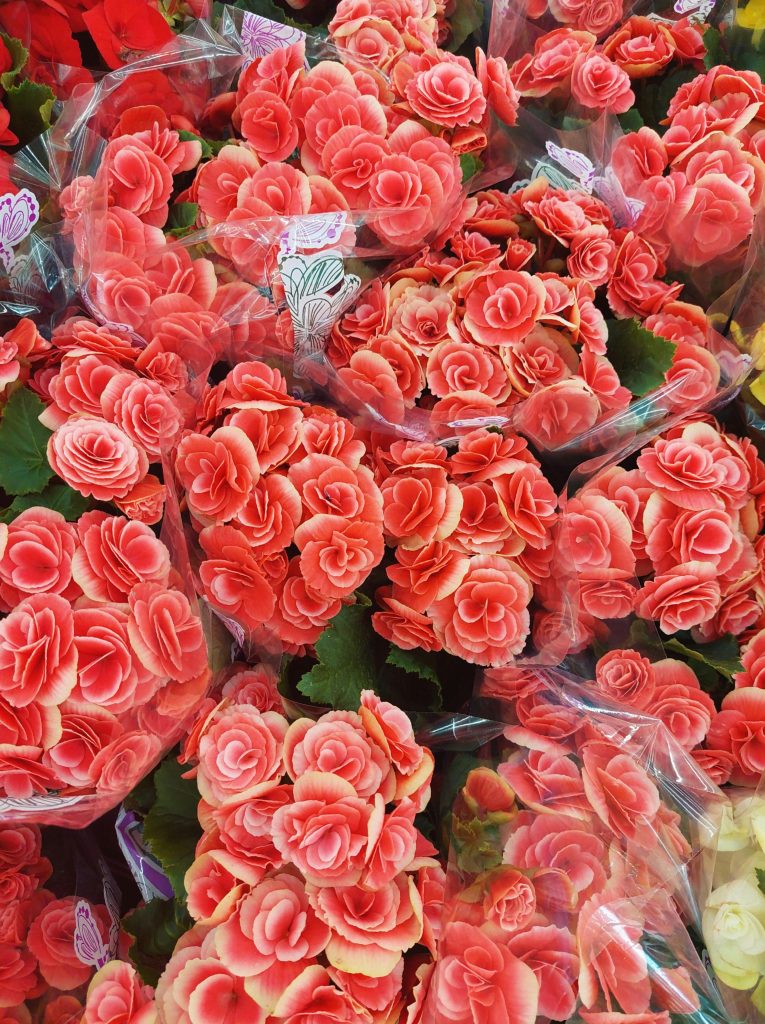
Fibrous (Wax): The old-school supermarket begonia. Glossy leaves and nonstop flowers, but they need more light than Rex types to avoid the dreaded “green blob” look.
Where to buy? Skip the sad, dark corner of the big-box store. Look for nurseries that display plants in bright, open shade—leaves should feel crisp, not leathery, and you shouldn’t see a cloud of fungus gnats when you rustle the pot. Online specialists often ship mini plugs in moss; they acclimate faster than mature specimens that have been greenhouse-coddled.
Providing the Ideal Indoor Environment
Light Requirements: Think “bright but polite.” An east-facing window filtered by a sheer curtain is the sweet spot. South or west? Pull the plant back two feet or slap on a sheer. North? You’ll need a grow light—University of Minnesota Extension notes that even “low-light” begonias stall out below 100 foot-candles. Aim for 1,000–1,500 foot-candles, roughly the brightness you’d want to read a novel without squinting.
Temperature Preferences: These are not succulents that thrive on sauna nights. Most begonias prefer 65–75 °F by day and no colder than 58 °F at night. Keep them away from radiator blasts and AC vents; sudden swings cause leaf edge browning faster than you can say “thermostat wars.”
Humidity Needs & Solutions: Winter indoor humidity can drop to Mojave levels—below 20%. Begonias flag when humidity dips under 40%. A pebble tray works for a single plant; for a gang, cluster pots together to create a microclimate, or run a small ultrasonic humidifier. Just don’t mist the leaves like you’re seasoning a salad—standing water in leaf crevices invites powdery mildew.
Planting & Potting for Success
Selecting the Right Pot & Size: Drainage holes are non-negotiable. Begonias breathe through their roots; suffocate them and rot sets in faster than leftover guac. Start with a pot that’s only 1 inch wider than the root ball—too big and the soil stays wet too long.
Choosing the Best Potting Mix: Skip heavy peat bags labeled “indoor plant soil.” Instead, whip up 40% peat or coco coir, 30% perlite, 20% fine orchid bark, and 10% compost. The mix should feel like a wrung-out sponge: moist but crumbly. Commercial option? Look for Epic Gardening’s aroid blends—yes, they work for begonias too.
Repotting Frequency & Technique: Every 1–2 years, or when roots circle the bottom. Slide the plant out, massage the root ball gently, and move up just one pot size. Do this in early spring so the roots colonize fresh soil during the active growth push.
Watering Correctly Indoors
The Golden Rule: Water like you mean it, then back off. Drench the soil until water exits the drainage holes; wait until the top inch feels like a dry piece of cake. For smaller pots, lift them—if it feels like an empty coffee mug, water; if it still has heft, wait.
How to Check for Moisture: Finger test for shallow pots, wooden skewer for deep ones (if it comes out dark and cool, hold off). Moisture meters? Handy if you’re the data-driven type—just calibrate it every few months.
Signs of Trouble: Yellow, mushy leaves = too much H₂O. Crispy edges plus wilting despite wet soil = possible root rot blocking water uptake. Conversely, pale, crisp leaf tips in otherwise firm leaves scream “I’m thirsty, human!” Adjust, then give the plant a week to respond before panicking.
Feeding for Growth and Beauty
Fertilizer Type & Ratio: A balanced 10-10-10 or 20-20-20 at quarter strength every two weeks during spring and summer keeps foliage lush. Want flowers? Swap to a bloom-booster (higher phosphorus) for cane types once buds appear. Organic fans: fish emulsion smells like a seaside fish-and-chip shop, but plants lap it up—just aerate your apartment afterward.
Feeding Schedule: Growth slows below 60 °F; cut fertilizer by half in fall and skip entirely in winter unless you’re running grow lights 14 hours a day. Over-feeding shows up as white crust on soil and leaf tip burn—think of it as the plant equivalent of a sodium-heavy fast-food binge.
Pruning, Pinching & Grooming
Snip above a node (where leaf meets stem) to force branching—same principle as getting a haircut to thicken bangs. Use fine-tip snips sterilized with isopropyl to avoid spreading pathogens. Remove spent flowers (deadhead) to redirect energy into new growth. Rex types rarely flower indoors, but their occasional bloom spike is about as useful as a chocolate teapot—clip it so the plant pours energy into psychedelic leaves instead.
Encouraging Blooms (if applicable)
Cane and fibrous begonias are your best bet for indoor flowers. Give them bright, indirect light plus that high-phosphorus fertilizer, and allow them to become ever-so-slightly root-bound—stress sparks reproduction. A nightly temperature dip of 5–8 degrees can also nudge blooming, mimicking outdoor autumn cues. Rex lovers, manage expectations: enjoy the foliage, because flowers are like Bigfoot sightings—rare and underwhelming.
Common Indoor Problems & Solutions
Pests: Mealybugs look like tiny cotton swabs dipped in wax; dab with 70% alcohol on a Q-tip. Spider mites leave stippled leaves and fine webbing—rinse foliage, then spray insecticidal soap every five days for three rounds. Fungus gnats hover like drunk drones; cut watering and top-dress soil with ½ inch of sand to break the breeding cycle.
Diseases: Powdery mildew powders leaves like donut sugar—improve air flow and apply a baking-soda spray (1 tsp per quart water). Root or stem rot means black, mushy tissue; unpot, trim to healthy tissue, dust cuts with cinnamon (natural fungicide), and repot in fresh mix.
Environmental Stress: Leaf drop after you first bring a plant home is the “new kid in school” response—stable conditions will stop it. Crispy edges plus leggy growth signal too much heat and too little light; scoot the plant closer to the window and away from the radiator.
Propagating Your Indoor Begonias
Stem Cuttings: Snip a 4-inch section just below a node, remove lower leaves, dip in rooting hormone, and park in moist perlite. Cover with a clear plastic cup to keep humidity high; roots appear in 3–4 weeks.
Leaf Cuttings (Rex): Cut a mature leaf, nick major veins on the underside, lay it vein-side down on moist sphagnum, and pin like a corsage. Baby plantlets will pop at each cut vein—think of them as botanical popcorn.
Division: Rhizomatous types can be split at repotting. Ensure each chunk has roots and at least one growing point; pot separately and keep humidity elevated while they settle.
Seasonal Care Considerations
Spring/Summer: Ramp up water and fertilizer, rotate pots weekly for even growth, and scout for pests that love fresh foliage.
Fall/Winter: Growth slows; cut water to about 60% of summer levels and stop fertilizing unless supplemental light keeps the party going. Rex types may drop leaves and retreat into rhizome dormancy—store in a cool 60 °F room, barely moist, and resume watering in February like you’re waking a sleepy teenager for school.
Frequently Asked Questions (FAQ)
Why are the leaves on my begonia turning yellow?
Usually overwatering, but check for drafts or sudden temperature swings first. If soil smells earthy, not sour, let it dry an extra day before the next drink.
Can I put my indoor begonia outside in the summer?
Yes, but only in full shade for the first week, then bright shade. Direct midday sun fries leaves faster than a solar oven. Bring them back in before nights drop below 55 °F.
How often should I mist my begonia?
Skip misting; it encourages mildew. Boost ambient humidity instead with a tray or humidifier.
Are begonias toxic to pets?
According to the ASPCA, begonias contain soluble calcium oxalates that can cause vomiting and drooling in dogs and cats. Keep them out of chew range.
My begonia is getting leggy. What should I do?
Move it closer to the light source and pinch back stems to just above a leaf node. New branches will sprout, giving you a bushier silhouette.
Conclusion
Master light, water, and humidity—begonias will reward you with living art that changes with the seasons. Notice how your plant responds; treat every crispy edge or new flower spike as a text message from your chlorophyll-laden roommate. Get the balance right and you’ll join the ranks of indoor gardeners who collect begonias the way sneakerheads collect limited-edition kicks: obsessively, joyfully, and with no end in sight.
Additional Resources & References
Deep-dive further with the American Begonia Society, university extension articles from NC State, or Missouri Botanical Garden’s plant finder. Stock up on supplies: a reliable moisture meter (check garden centers or big-box retailers), an ultrasonic humidifier with auto-shutoff, and premium potting mixes from brands like FoxFarm or Espoma. Happy growing!